
Psst…we’ve got a secret: you don’t need a massive budget to launch your local business online and reach new customers. In fact, most essential elements of digital discoverability are free to set up.
Whether you’re a dog walker in Durham or a maths tutor in Middlesbrough, you need to know how to get your side hustle found online.
According to our member survey, 45% of side hustlers want to learn more about search engine optimisation (SEO), which helps make your business more discoverable on search engines.*
We sat down with Toby Gillatt, giffgaff’s Head of Digital Performance and Discoverability, for his top tips on launching a business online on a budget. We also spoke to our Broadband Boss grant winner, Fruz, founder of Liverpool-based cat-sitting service CozyCat — who put every tip into practice and took her side hustle full-time in 2026.

Going full-time was never the plan, she explains: “I just wanted to play with cats." Just over two years after starting CozyCat, Fruz has looked after more than 200 cats for 54 clients and quit her job as a teaching assistant to become a full-time cat sitter.
If you’re just starting out or looking to grow your local business online, these essential tips will boost your local SEO and overall online discoverability.
How to get your local business found online
Step one: establish your digital identity
One of the first steps is owning your digital identity across platforms. This means claiming your brand name and using the same username and website address where possible. This not only allows customers to find you easily, but also signals to algorithms that you are a trustworthy business. Both are excellent for discoverability.
Toby recommends using a website like namechk.com to search for the availability of your brand name. If your preferred name isn’t available on your key platforms, you can either tweak your brand name (add an underscore or a location) or contact the owner of the desired profile and offer to buy it. “Own them all,” says Toby. “You don't have to use them, but you can own them, so nobody else is going to buy them.” It costs nothing to set up these accounts and acts as insurance if you plan to expand onto new platforms later.
Fruz did this from day one. She came up with the name CozyCat after watching her own cat curled up on a radiator bed. “I just wanted the name to show how I wanted the cats to feel and how I wanted the owners to feel,” she explains. She added Liverpool to her handles to boost local discoverability and, as the business grew, it now supports a five-to-ten-year plan to franchise in different cities around the UK. The lesson? You never know where your business could take you.
Step two: Focus your efforts
You don’t need to show up everywhere with your business, only where it counts the most. Think about where and how your audience spends time, and what you need to process payments and orders.
“If you're creating a tangible product, then it makes a lot more sense to push it on Meta (Facebook or Instagram) because you can start to show people the benefits of it and you can bring it to life with video content and the different ways in which people consume,” says Toby.
A nail technician, for example, doesn’t need a full-blown website. Instagram or TikTok can act as a portfolio, with bookings managed through a third-party app. If you spread yourself too thinly, you’ll most likely burn out and stop posting altogether. Choose the most important and do them well.
Fruz picked Instagram and Facebook. First, because they’re the platforms she’s most comfortable using — meaning she was familiar with how they worked and more likely to stick with them. These platforms also helped her become hyper-local and tap into the local community. For her, this means being active in local Facebook groups, DMing cat owners directly, and using local hashtags like #catsofliverpool.
By contrast, she deliberately ruled out TikTok. As Fruz put it, once you go viral on TikTok, “you can go viral anywhere” – great if you want national or global reach, but it's less useful if you only want bookings in your local area.
The lesson is to choose the channels that best fit your business and target audience. If you need to be within driving distance of your customers, there’s little point reaching people on the other side of the world. You’ve got limited time and resources, so focus on where your audience will be.
Step three: put yourself on the map
Next, think about how your potential customers navigate the world. Digital maps help your small business show up when customers are ready to discover you and act as a digital directory.
The trick is to diversify your listings, so you’re present across platforms to reach the most people. Think about where your customers may be, not just the map you prefer as a user.
Google Maps, Apple Maps and Bing have extensive reach and are a good place to start. UK-based sites like Yell (formerly Yellow Pages) and Thomson Local are useful places to list these businesses, as well as TripAdvisor for hospitality-based businesses.
Many of these platforms let you set up a business profile for free, which places your business on a digital map for those searching.
When the time is right, offer advertising opportunities to boost your business's visibility even further.
“ Digital, interactive maps are built into the way we live and if you can add your business into that, that’s the cheat code,” Toby says.
The ultimate goal is to show up on a “near me” search using either a physical address or a service area radius to place you on the map. From there, you can go further with geofenced Maps ads, building a perimeter around your service area so you appear only to people searching in relevant areas.
For Fruz, a strong local presence is essential for booking clients. “We’re saturated with cat sitters in Liverpool,” says Fruz.
She set up her Google Business Profile with a clearly defined radius to show up in "near me" searches. On Instagram, she took a similar approach to local search by using boosted posts. She learned to deliberately target a smaller radius than she thought she'd need, since reach still spilled over into surrounding areas anyway.
Step four: harness word of mouth
Building trust helps potential customers and search engines pay attention to your business. “Reviews go a long, long way,” says Toby. Word of mouth is a powerful marketing tool. Don’t be afraid to proactively ask customers to leave reviews. It’s even better if they can upload photos and mention the specific neighbourhood or city.
The more positive reviews your business receives, the more likely you are to rank in local search. “It's a numbers game of just basically getting advocacy,” says Toby. “That's what word of mouth is; it's just advocacy.”
Fruz understands why trust matters to her customers: “People buy from people.” Alongside her reviews, she also posts behind-the-scenes content on social media, including cats playing and the reality of running a small business. Her latest is a bespoke signature social video funded by her giffgaff Broadband Boss Academy grant, which reinforces her brand identity, personal touch and sense of humour.
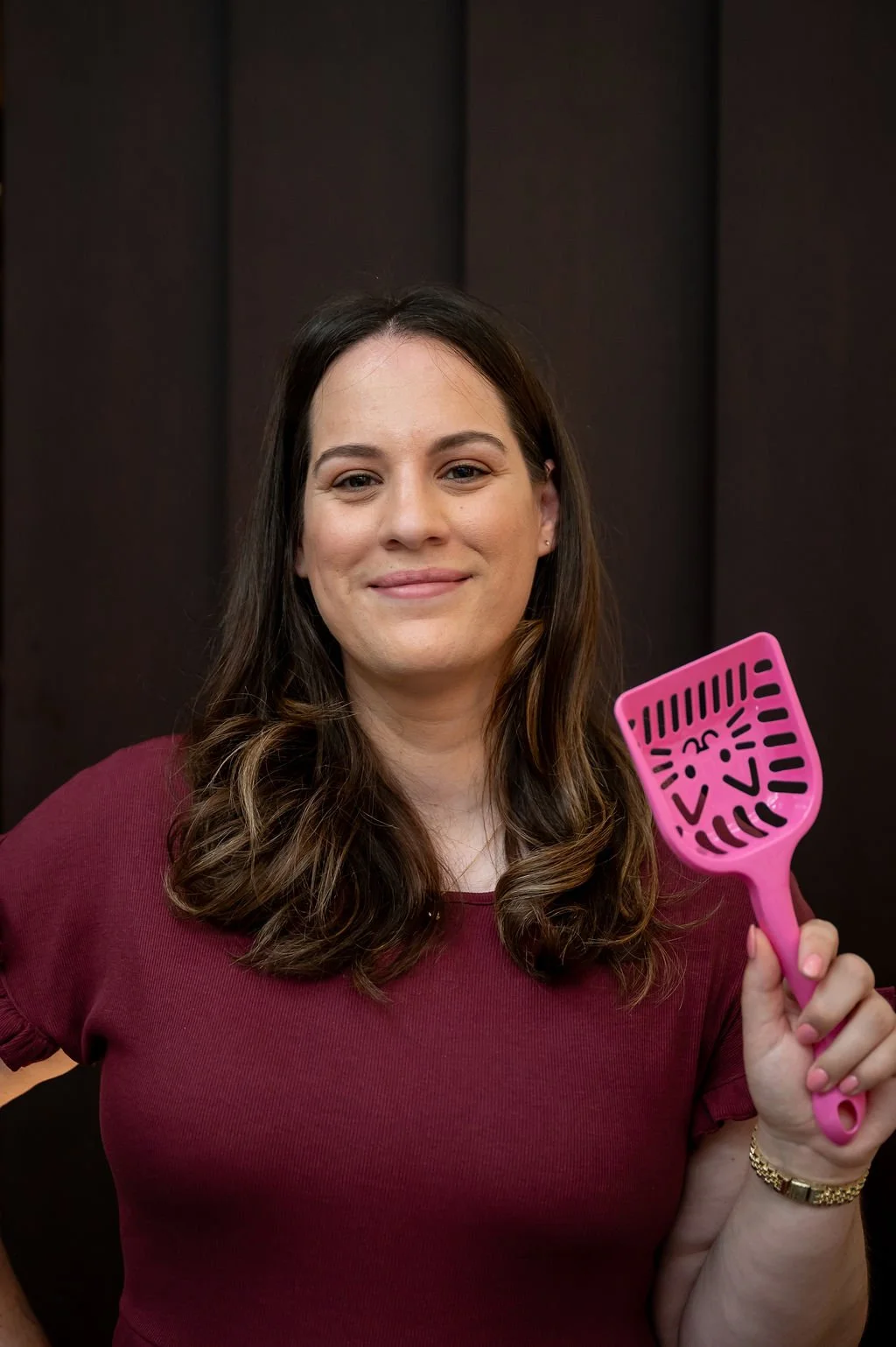
CozyCat has around 30 reviews online so far — and Fruz admits that she could be doing more to generate them. "I feel bad asking for reviews," she admits, "but then whenever I do, people actually leave lovely reviews." She’s now building an app with a friend, which will send an automatic review request at the end of each booking.
Fruz has plenty of anecdotes of how building trust pays off. One client followed her for six months before making a booking. She got in touch after seeing a funny cat video, saying: “I haven’t met you yet, but I want you to look after my cat because you’re the exact person I’m looking for.”
Building a local business presence is easier than you thought
It doesn’t cost much to launch your business online, and for many side hustlers, organic online discovery and word-of-mouth recommendations are enough to support their business.
If you're focused on scaling your business or want to go full-time with a side hustle, it may be time to start strategic advertising to reach more customers and build a reliable monthly income.
Your Next Move: Claim your brand identity
Once you’ve defined your brand identity, it’s time to claim it online. Check availability and make sure you set up accounts on all relevant platforms.
*204 UK adult giffgaff members who have a side hustle, giffgaff survey, July 2026
Photos by Kayleigh King at Wild Kind Photography