
How I Got Started: AJ Lewis, F1 Content Creator
'How I Got Started' unlocks career secrets so you can make your move. We sit down with people carving their own path to find out what it’s really like to work in certain industries and share practical tips to help you get started.
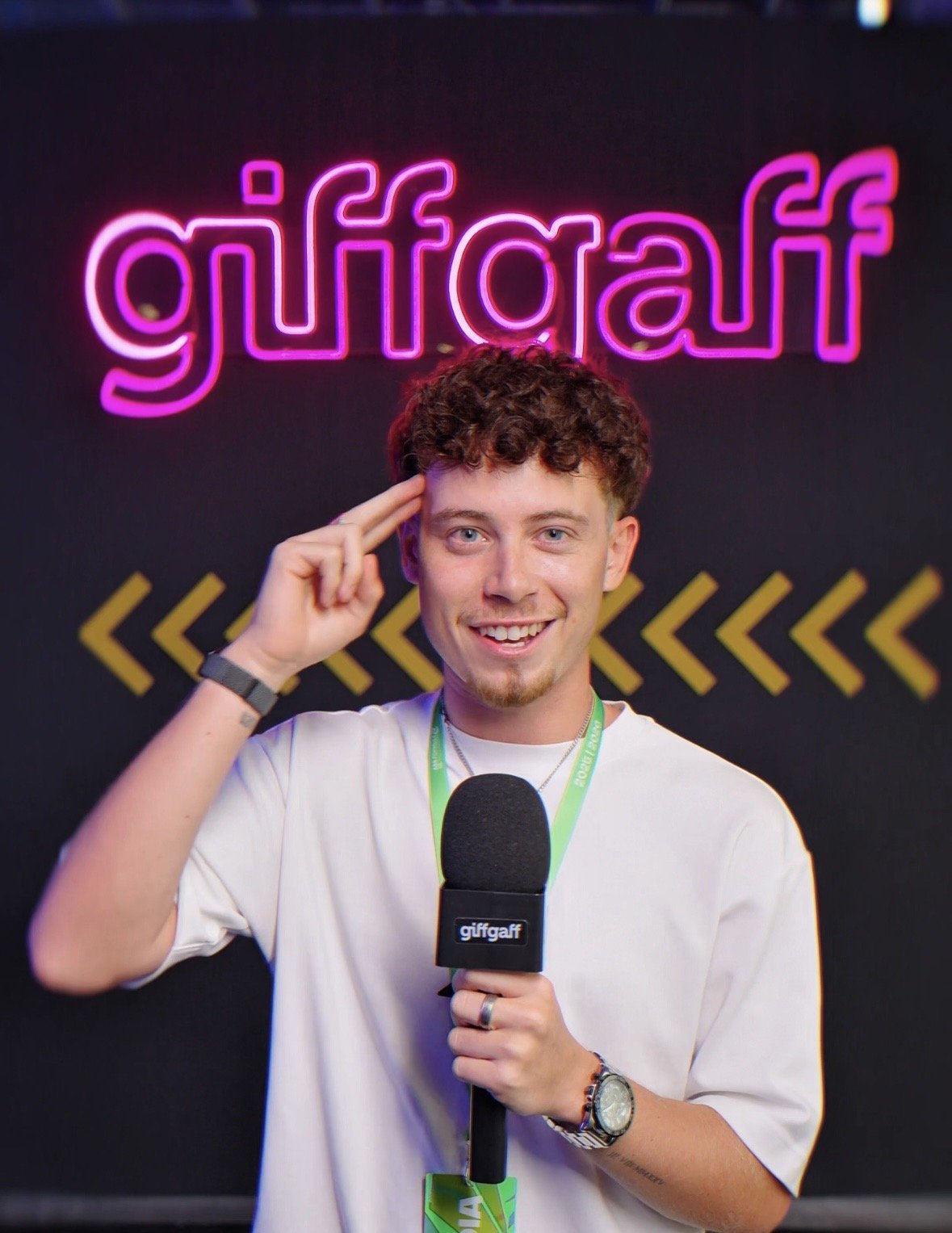
AJ Lewis
“I’m lucky that my job doesn’t really feel like a job.”
AJ Lewis always knew he wanted to be a presenter. Growing up, his heroes were YouTubers and radio hosts, and he remembers watching Jake Humphrey host Formula 1 on TV, thinking it looked like the dream job.
His first big break came during his final year at uni, when he landed a gig as a video editor with a popular YouTuber after responding to a job advert. With no professional editing experience, AJ used his own YouTube videos as a portfolio, and after a trial edit, he got the job. “I just needed the opportunity to show what I could do,” he says.
He spent years travelling the world, editing content and juggling work with his studies before eventually going full-time. “I was travelling the world and going to places that I'd dreamed of, but I was getting paid to do it,” he says.
But he knew he had to pursue his lifelong dream. So, in 2025, he left his job to become a freelance content creator specialising in Formula 1 content, a sport he’d been passionate about from a young age. With zero industry contacts and few followers, he admits it was a big risk, but one he was determined to take.
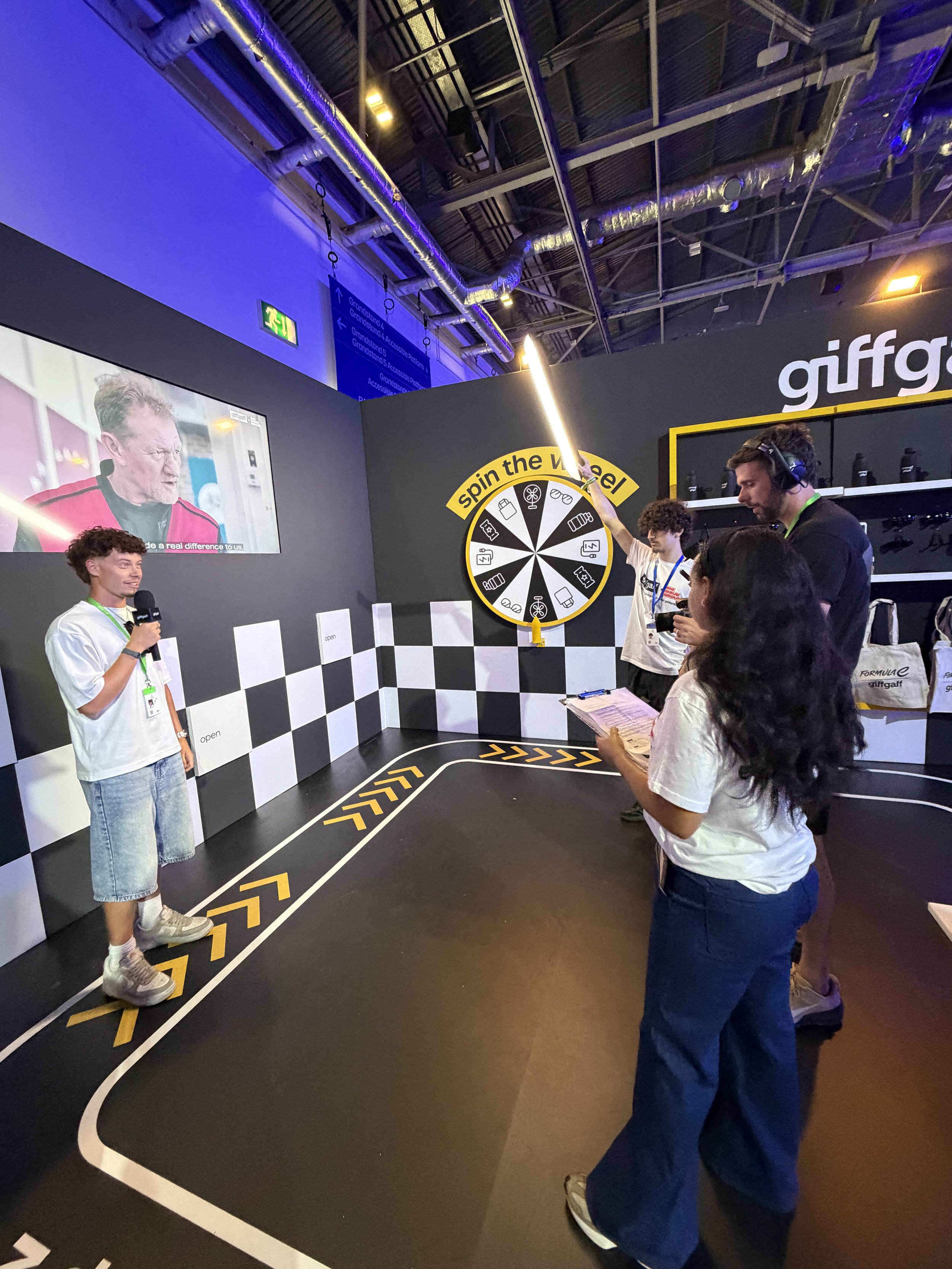
AJ teamed up with giffgaff as a creator for the August 2026 London Formula E-Prix, bringing the event and brand partnership to life. Where Formula 1 is a performance-driven race, Formula E focuses on sustainability, powered by electric vehicles and a greener vision for motorsport — making it a perfect partner for giffgaff.
We spoke to AJ about breaking into an industry with no contacts, teaching himself to edit videos and the importance of putting yourself out there.
I always dreamed of being a presenter.
I'm lucky that I knew what I wanted to do from a young age. Some people my age or older still don’t know what they want to do. I grew up watching F1 with Jake Humphrey and I thought it looked like a dream job, interviewing the drivers and travelling the world. It was kind of niche at the time; I think I only knew one other person in my whole year at school who watched F1.
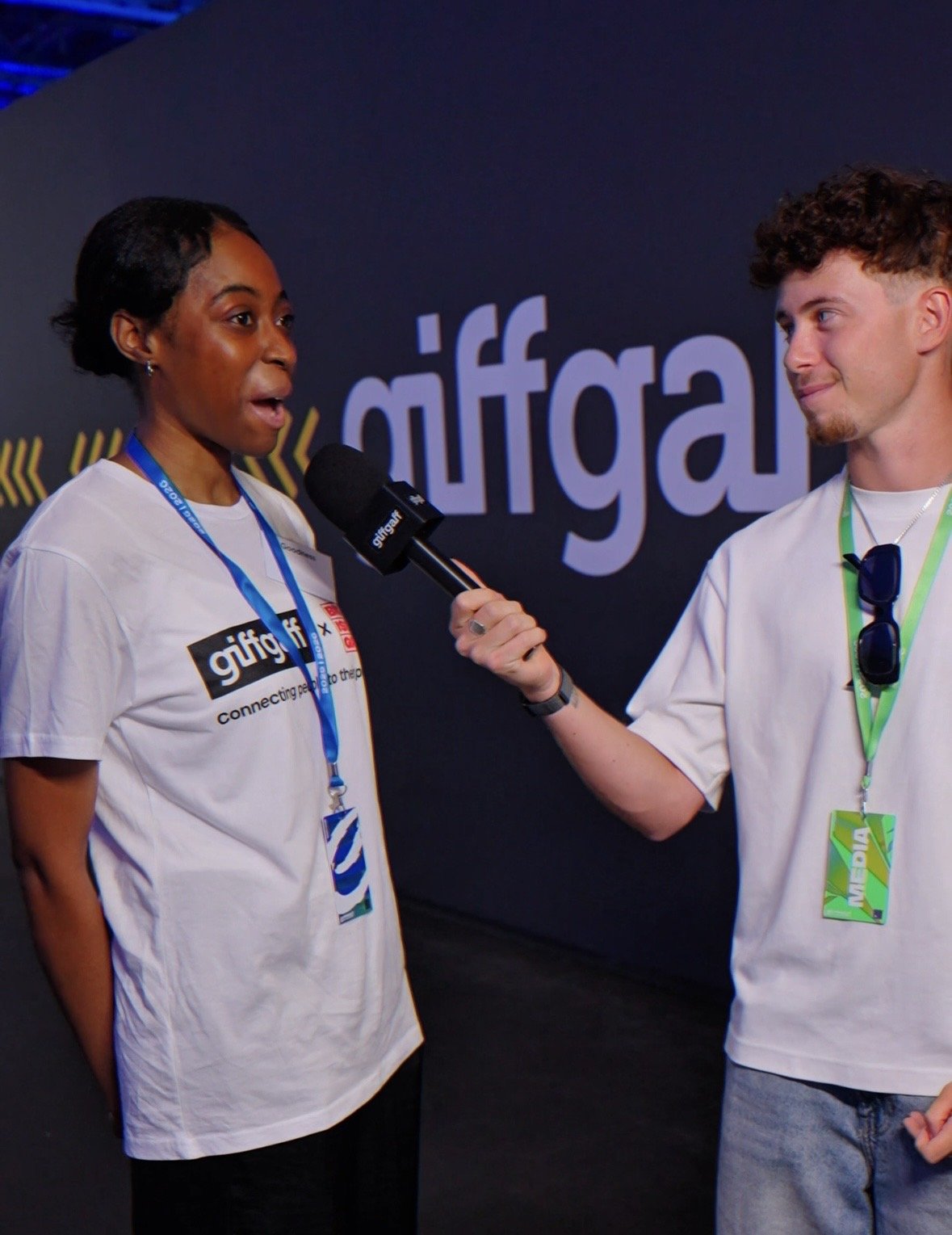
I took a leap of faith with no industry connections or following.
I left a job with a regular salary. It was a big risk, but I knew what I was capable of. It was one of the hardest things because people often don’t give you a chance unless they know you.I was emailing people and hearing nothing back. But a lot of people told me to keep putting myself out there because people will take notice eventually.
You never know who’s watching your videos.
You might only have 300 views, but it could be the head of a company or a Formula 1 team who’s watching, you know what I mean? That's how a lot of these algorithms work anyway. You don't have to even follow people anymore to see their content. I kind of changed my mindset to focus on myself and just keep creating content, working on my craft. If you want something, you can't really sit behind a screen.
The proudest moment in my career was getting into the F1 Paddock.
It was surreal.It was a few months into my content journey, and I knew I had to get to an F1 race, but I couldn’t wait for someone to invite me — that’s not how the world works. I took my savings and bought a ticket to the Budapest Grand Prix with my dad. It’s the cheapest way to go to F1. By chance, I’d gone to an event the week before and met a guy who worked for Aston Martin. We had chatted about F1 and connected afterwards, and a week later he’d organised for us to get into the paddock. It was a pretty cool moment. I even got the date tattooed on my arm.
I taught myself how to edit videos.
I knew I needed a backup plan if being a presenter didn’t work out. I had nothing to edit, so I filmed my own videos to learn. I use Final Cut Pro on my MacBook. It's a tool I've used since I was 16 in college. It's a one-off payment, unlike other software that requires a subscription. I also got the student deal, which made it more affordable. It does everything that I need it to do.
I’ve had many mentors.
People I’ve worked with in front and behind the camera. A lot of creators have taken me under their wing, too. It’s important to have good people around you. I try to connect with people on a human level.Some people only talk to you if they can get something out of you. There’s a lot of that in this industry.
I don’t really scroll social media.
I’m on TikTok a lot, but to engage with people commenting. I don’t really watch videos or know a lot of creators in the space. The bad thing is that I might miss a trend or news, but I try not to compare myself to other people and focus on myself. F1 fashion is kind of my niche, because there weren’t many men doing it.
Burnout's a real thing, and a lot of people struggle with it.
I try to walk 5km every day, where I’ll listen to music to clear my head. If you feel good, then you feel like you’ve got more energy to do more. A lot of people in the social media industry are scared to take a break because of how fast-paced everything is. But you can, and everyone’s still there, and it’s not the end of the world; it’s healthy to have those breaks.
The hardest thing is the unpredictability.
You never know when your next paycheque is coming. It's a lot of mental strength. That keep-going mentality. You face a lot of rejection, so it's dealing with that and pushing through and never giving up. There are moments where I question what I'm doing and whether I've done the right thing, but it's trusting your gut and believing in yourself. It's always the unknown, but it's about having that positive mentality and looking at the positive side of it. No day is the same, but that's what makes it different and exc
There’s a lot of exploitation in the content creator world.
Brands will reach out and want everything done, but not pay you for any of it. It’s gutting because you feel devalued, and it’s a barrier to get across. It happens a lot, sadly, especially for smaller creators. The only way you can challenge it is to grow and try to raise your value, so you have a foot to stand on.
I’m lucky that my job doesn’t really feel like a job.
Working at the London E-Prix with GiffGaff was an amazing experience. Everyone was so welcoming and supportive. The company’s values align with mine, and I’m glad they were willing to give me an opportunity. Even when I wasn’t working, I was at the event seeing one of my favourite artists on stage or walking through the paddock. Yes, it’s long hours, but it’s all just fun for me.
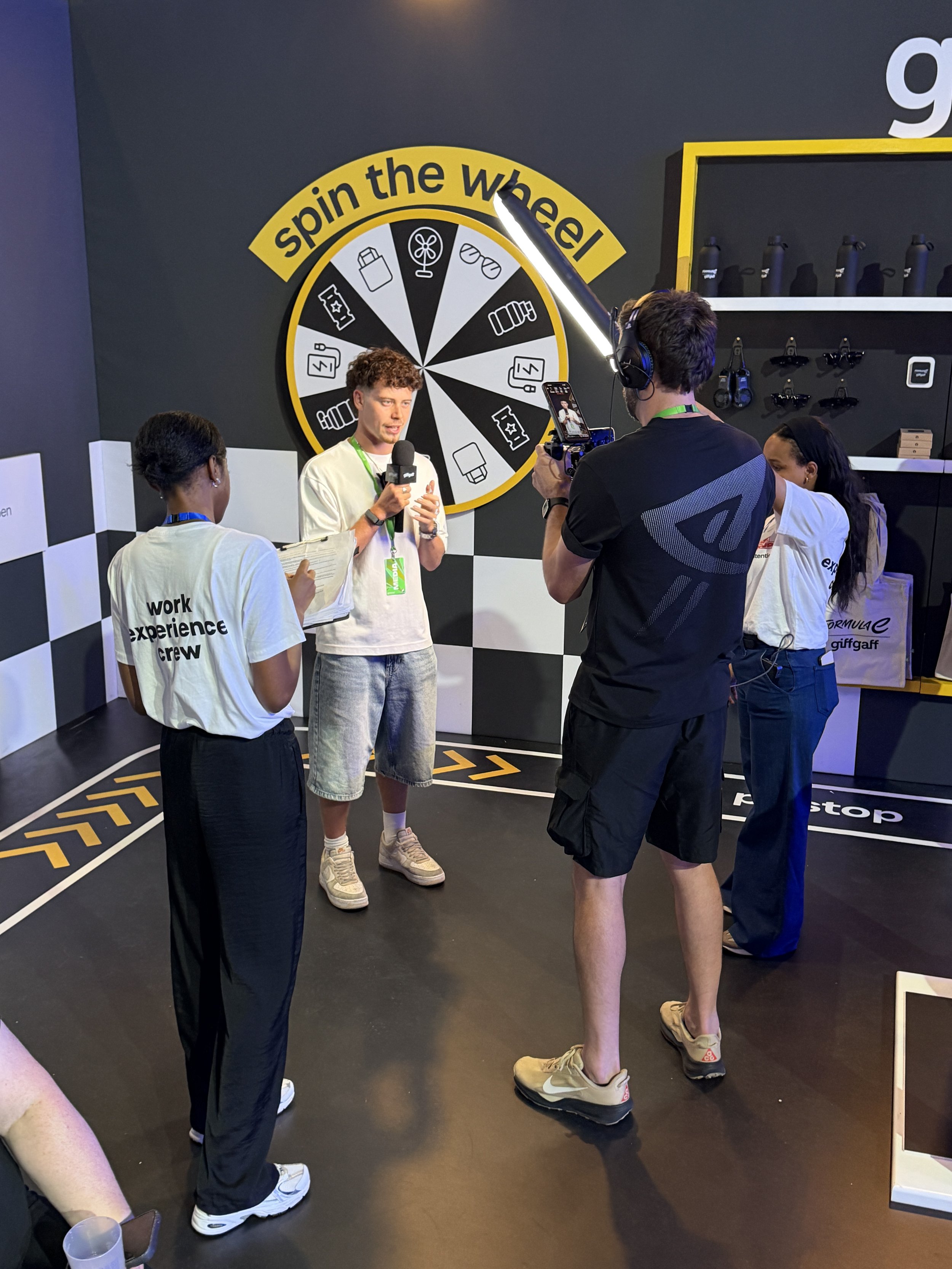
Presenting the giffgaff hero video was a big learning curve for me.
I’ve done presenting and reading scripts before, but never in a big place like that. It was very overstimulating: there was music blaring and so many moving pieces. Normally I work in a controlled, quiet environment. I had to adapt to the situation on the day and learn how to block everything out. I was determined to get it right.
As told to Brogan Driscoll
Your next move:
Post a video on one social media channel this week. It doesn’t have to be perfect, but every opportunity is a learning experience. It’s a great chance to practice your editing skills with easy-to-use, free tools like CapCut.
And who knows, as AJ says, “You never know who might be watching your videos.”
Your next post could get you noticed by someone who can help further your content creator career.