
“In most role-playing games, you have to fight your way through the story. In our game, you get fought against, but you’re not allowed to fight back.”
Sea Beyond isn’t like other video games. Set in a mythical world suffering from climate collapse, terrified animals may attack at any moment. But there’s a catch. The game is non-combat, meaning that instead of fighting, players focus on befriending the animals and other characters they meet, learning to coexist with them as they move through the game.
Daryl Vincent, creative director at Fail Forward Games, the indie studio developing Sea Beyond, is passionate about this point of difference. He says people’s “eyes light up” when they learn how the usual gameplay has been turned on its head.
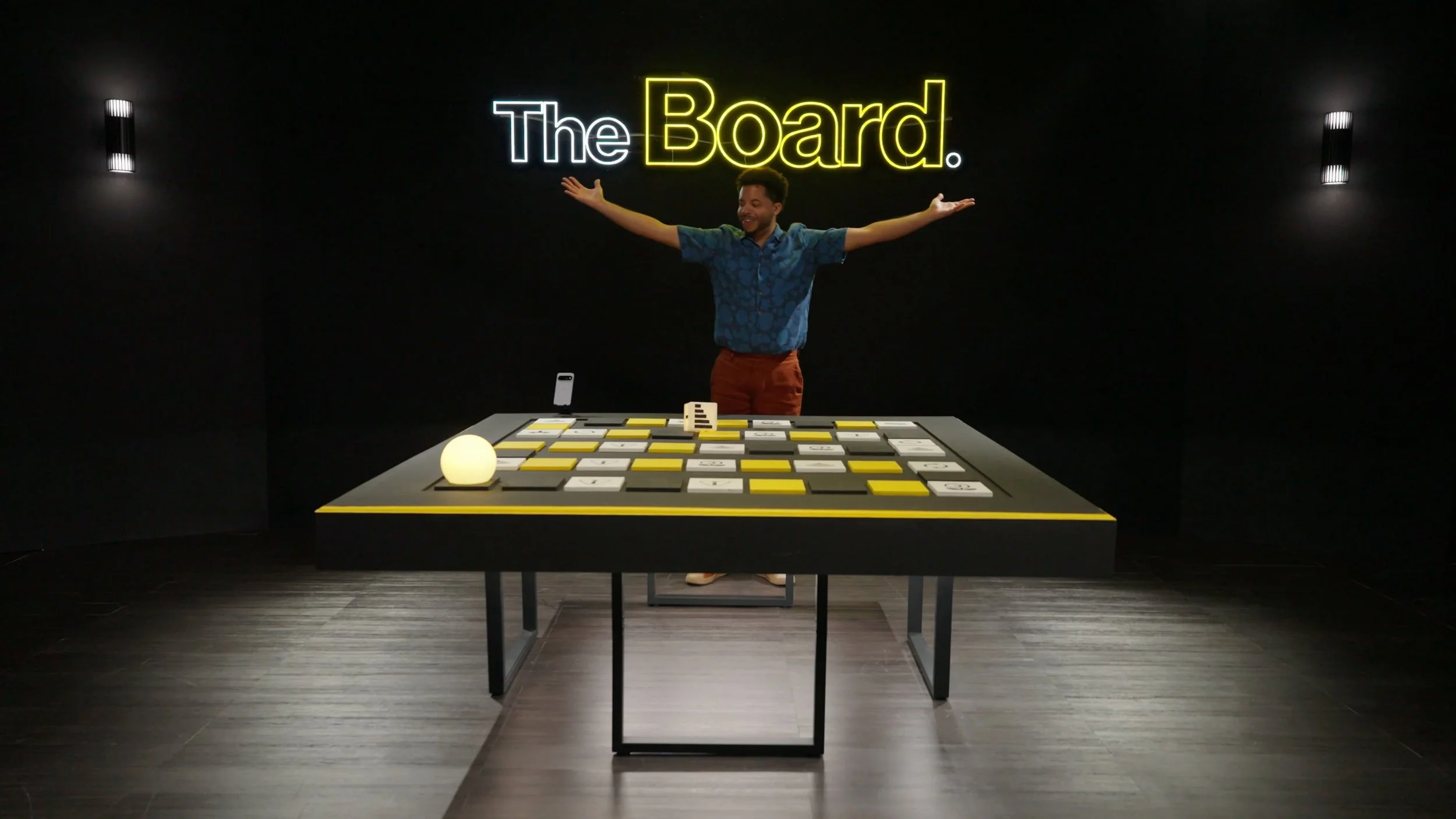
It isn’t the only way that Sea Beyond is shaking things up. Daryl was determined to break away from traditional medieval European fantasy and focus on indigenous Caribbean mythology, particularly Taíno folklore. “There's so much that is completely untapped in terms of games,” says Daryl, who is part Caribbean. “And we want to bring that out."
Accurate cultural representation is central to his game development. He’s carried out extensive research, including speaking with community members online. “The community loves seeing the art and stuff that we're doing,” he explains. “They're so supportive, which is really sweet. That’s the part I was most scared of because for me it mattered that we're not diminishing a culture.”
Sea Beyond is set for release in 2028. Daryl is the first to admit that a lot has to happen between now and then to get the game ready, including creating artwork, writing dialogue and hiring actors to act out the narrative scenes.
Developing an ambitious game like Sea Beyond takes time and money. Fail Forward received funding in 2024 from the UK Games Fund, which allowed them to hire a ten-person team and make progress on the game. The funding has since run out and Daryl’s focus has shifted back to raising capital.
Will the Game Changers see beyond current financial roadblocks and focus on the game’s long-term potential? Read on to find out more.
Why we’ve created The Board
At giffgaff, we support people to make their next move. Starting your own business means making big calls, often with no one around to talk them through. The Board puts those decisions on the table so players (and everyone watching) can clearly see the choices and trade-offs it takes to run a successful business.
During each episode, an entrepreneur maps out the future of their business on a physical board game, completing challenges and answering questions that probe every corner of their strategy. If they win, they get to choose between a giffgaff grant or mentorship.

Watching from another room are the Game Changers: Patricia Bright, entrepreneur, award-winning content creator and founder of The Break, a financial education and lifestyle platform; and Jordan Schwarzenberger, co-founder of Arcade, the entertainment company behind huge creator brands, including The Sidemen and Generation Football. Together, they will follow the players' progress on The Board and decide whether they’ve got what it takes to succeed in business.
If successful, players will be invited to an interview with the Game Changers, who will dig deeper into the business before offering a choice between a £5,000 giffgaff grant or Fair Play mentorship. If players aren’t lucky enough to make it through to the final interview, they will receive £1,000 to spend on their business.
A key part of modern game development is growing an audience before release, explains Daryl. It helps in two ways: building momentum ahead of launch so people are more likely to buy and play the game, and showing investors and publishers that there’s demand.
“The game market is so oversaturated that, without an audience…no one’s going to play it,” he explains.
Developers can build an audience in a few places: posting clips on social media, starting fan-based communities on Reddit or Discord, and putting the game on Steam, a platform for buying and playing games, where people can add it to their wishlists ahead of release.
In The Board episode, the Game Changers struggle with the gaming industry's high upfront investment needs and unpredictable returns. When asked for unit economics (revenue and cost on a per-unit basis), Daryl’s vague response highlights potential pitfalls. “There is no unit economics because it's all a punt,” says Jordan. “The real question is how much money are you losing every month? And what's your burn rate and what's your potential to make that back?” The Game Changers acknowledge the self-belief and determination game developers must have to persevere. “You have to have some real confidence in yourself,” adds Jordan.
The timeline is another sticking point. Role-playing games can take more than five years to develop, and it’s clear Daryl won’t compromise on quality just to hit a release date. This concerns the Game Changers. “Speed to market matters,” says Patricia, adding that a lot can change in five years and that giving your customers a taste of a product is valuable. Jordan agrees, suggesting game developers launch a lite version to test it, then developing more iterations once it’s proven successful.
Will the Game Changers see a business opportunity with Sea Beyond and reward Daryl’s ambition? Watch the full episode on YouTube.
Daryl isn’t the only player who fiercely protects the quality and integrity of their product. Watch episode one with Danielle Close, founder of My Skin Feels, to find out what it takes to build a beauty business with sustainability at its core.